Week 3- Orientalism and Paul Poiret
Orientalist Fashion
The orientalist fashion era began from 1910s to 1920s. The types of clothing worn included jeweled clothing, lavish layers, turbans, head wraps, tunics, robes, fringes, harem pants, and more. It is the transaction between the East and the West.
I think this was also the very beginning of globalisation. The gradual process of international integration from the interchanging of world views, products, ideas, and aspects of culture, has led to where we are today.
Robe á la turquerie is inspired by textiles from all over Asia, primarily China, India, and Turkey in the 18th century.
The Ballet Russes
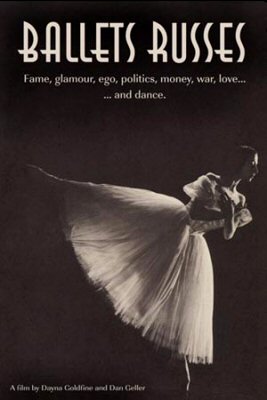
The Ballet Russes was a ballet company established in 1909 by Serge Diaghilev. He presented a season of Russian art, music, and opera. This created a sensation in Western Europe because of the great vitality of Russian ballet compared to French dance. It became one of the most influential ballet companies of the 20th century. It was famous for its ground-breaking artistic collaboration among contemporary choreographers, composers, artists, and dancers.
Ballet Russes program with design for Nijinsky in La Peri by Leon Bakst, 1912
Paul Poiret
Paul Poiret is the leading French fashion designer during the first two decades of the 20th century. He was known for his Orientalist style, replacing the corset with the brassiere. Later, he encouraged women to free themselves from the corset and adopt the bra instead. Orientalism during that era appealed to his sense of colour and style. He was able to incorporate exotic styles in his dresses such as:
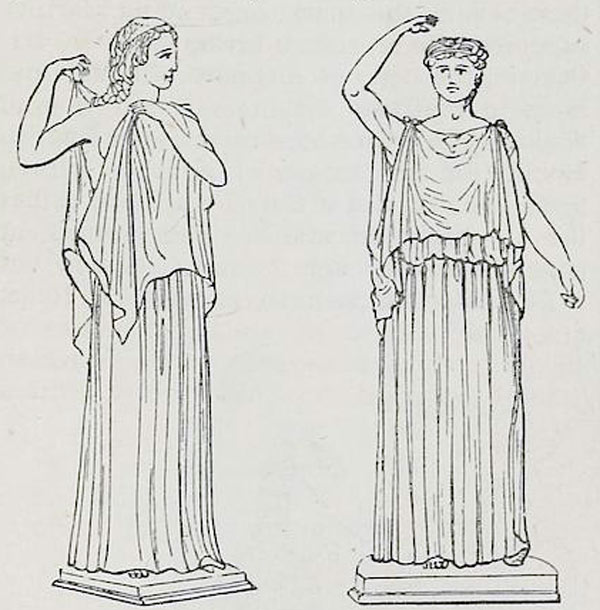
1. The Greek Chiton: A chiton is a form of clothing from the Ancient Greece. It is worn as a sewn garment for men and worn as a draped garment held on the shoulders for women.
 |
| The Greek Chiton |
2, The Japanese Kimono: The kimono is a Japanese traditional garment that is used for important festivals or formal events. It is a straight-lined robe worn with attached collars and long wide sleeves.
 |
| The Japanese Kimono |
3. The North African and Middle Eastern Kaftan: A kaftan is a variant of the robe or tunic. It is often worn as a coat or overdress, reaching to the ankles, with long sleeves.
 |
| The Kafta |
Paul Poiret's designs:
1. The minaret tunic: A wide tunic boned to hold the skirt in a full circle and worn over the hobble skirts.
The tunic by Paul Poiret.
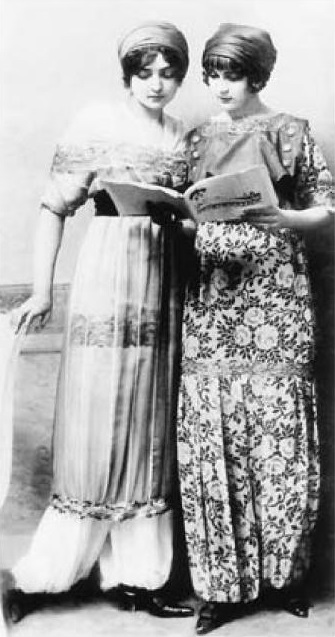
2. Hobble skirts: It is loose and free through the body, but the hem is so narrow that women could hardly move.
3. Lampshade design: Dress with an overskirt which was wired to give a lampshade effect.
Lampshade skirt
4. Sultana Skirts: Printed maxi skirt that sits naturally at the waist.
5. High-waisted silhouette: The silhouette of a garment sitting higher up between under the bust and the waist.
6. Capes: Covered with fringes and tassels with multi-coloured feathers, pearls, and usually worn under white fox stoles.
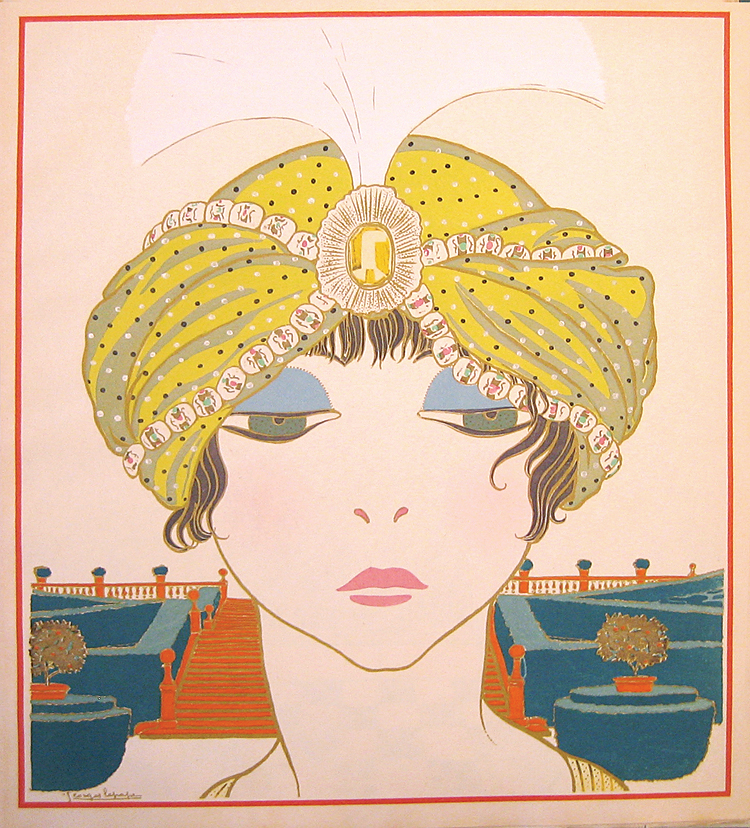
7. Turban a L Orientale: Head covering consisting of a long length of material wound around a cap or the head.
Paul Poiret design turbans.


%2B%2BPortrait%2Bof%2BMademoiselle%2BGuimard.jpg)